Overview
Crypto Forecast posts crypto signals: a coin, a direction, where to get in, where to take profit and where to cut the loss. We sell the analysis by subscription and don't earn when people lose, so the honest thing to show is how often it's right. I designed the signal screens, from the first card to launch.
Everything in one look
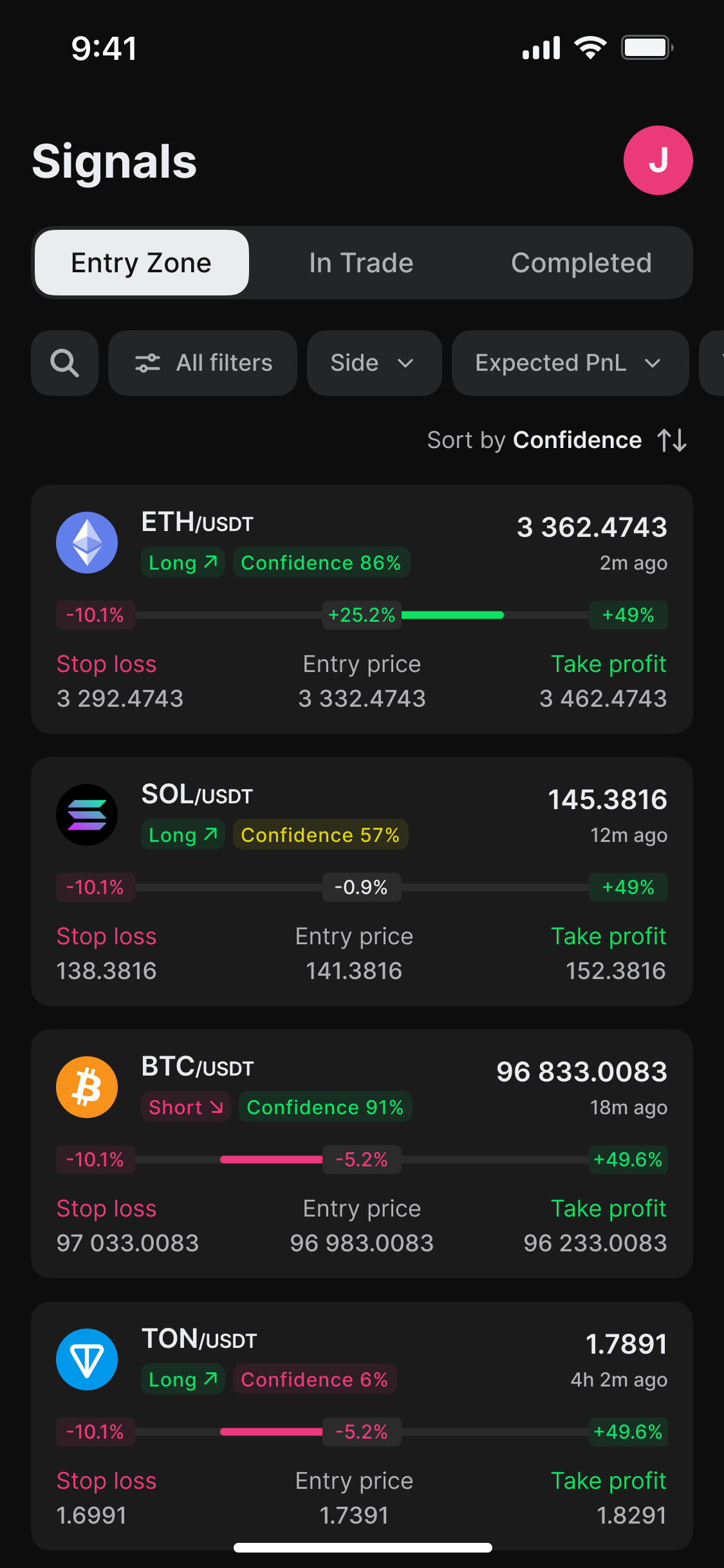
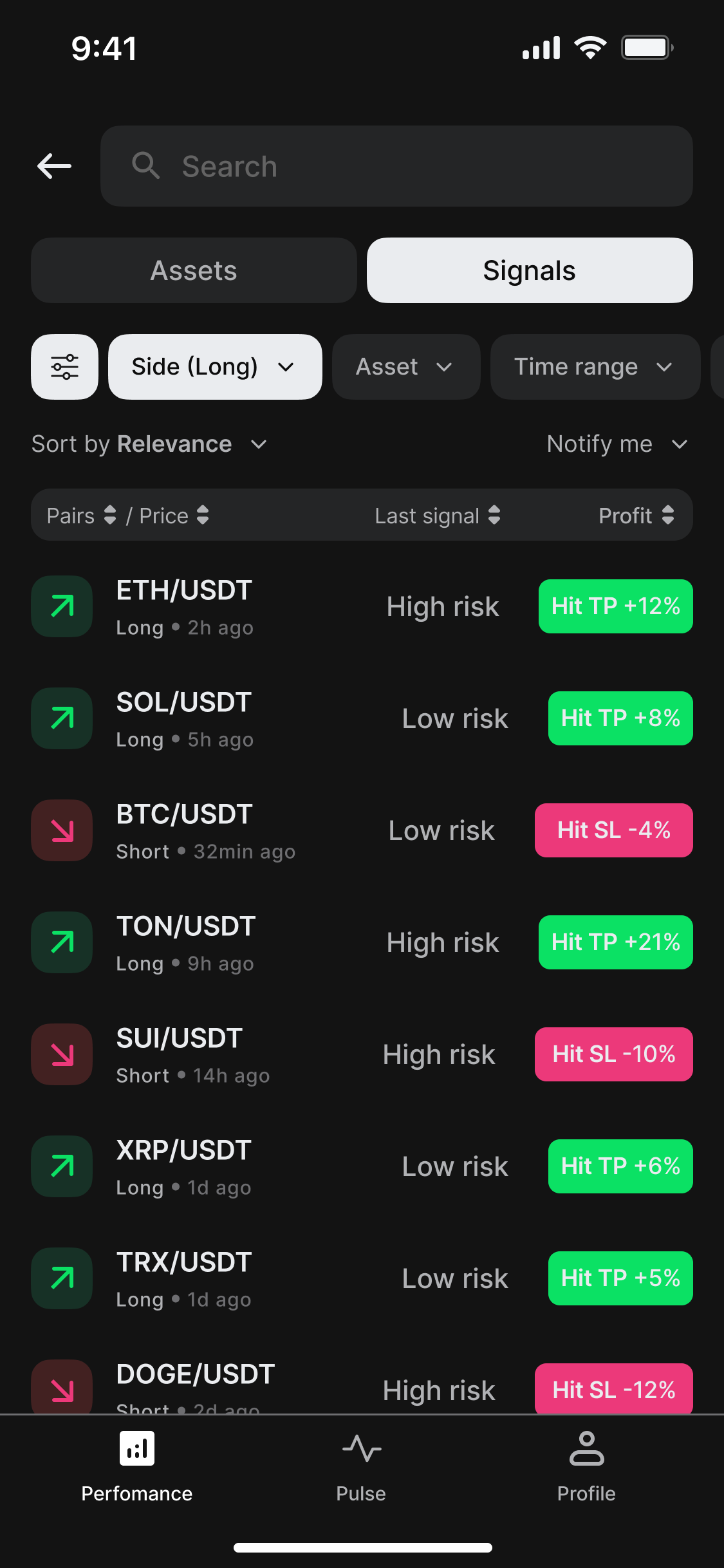
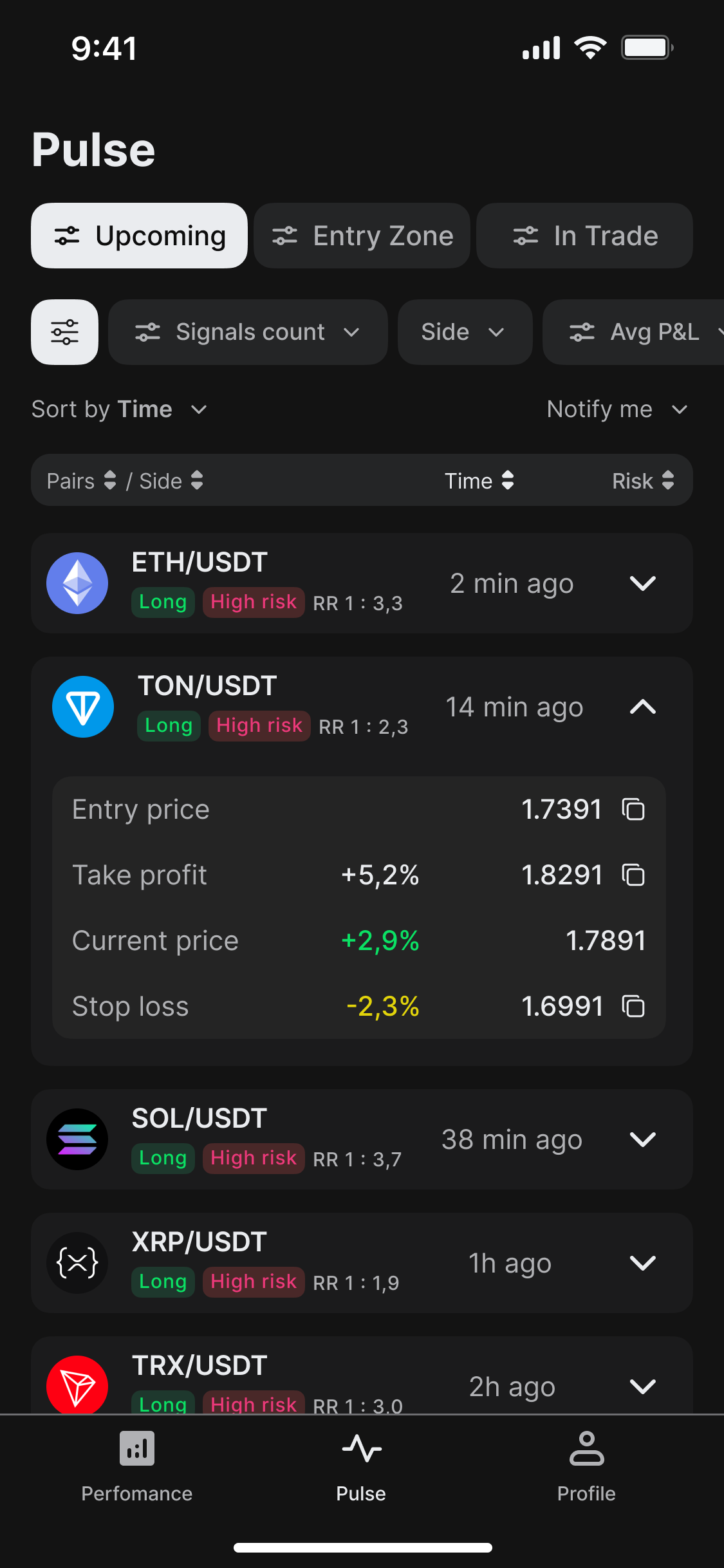
My first version was a list: pair, risk, result, and everything else one tap away. But someone who trades on signals needs entry, take profit and stop loss before anything else, and which way the price is heading.
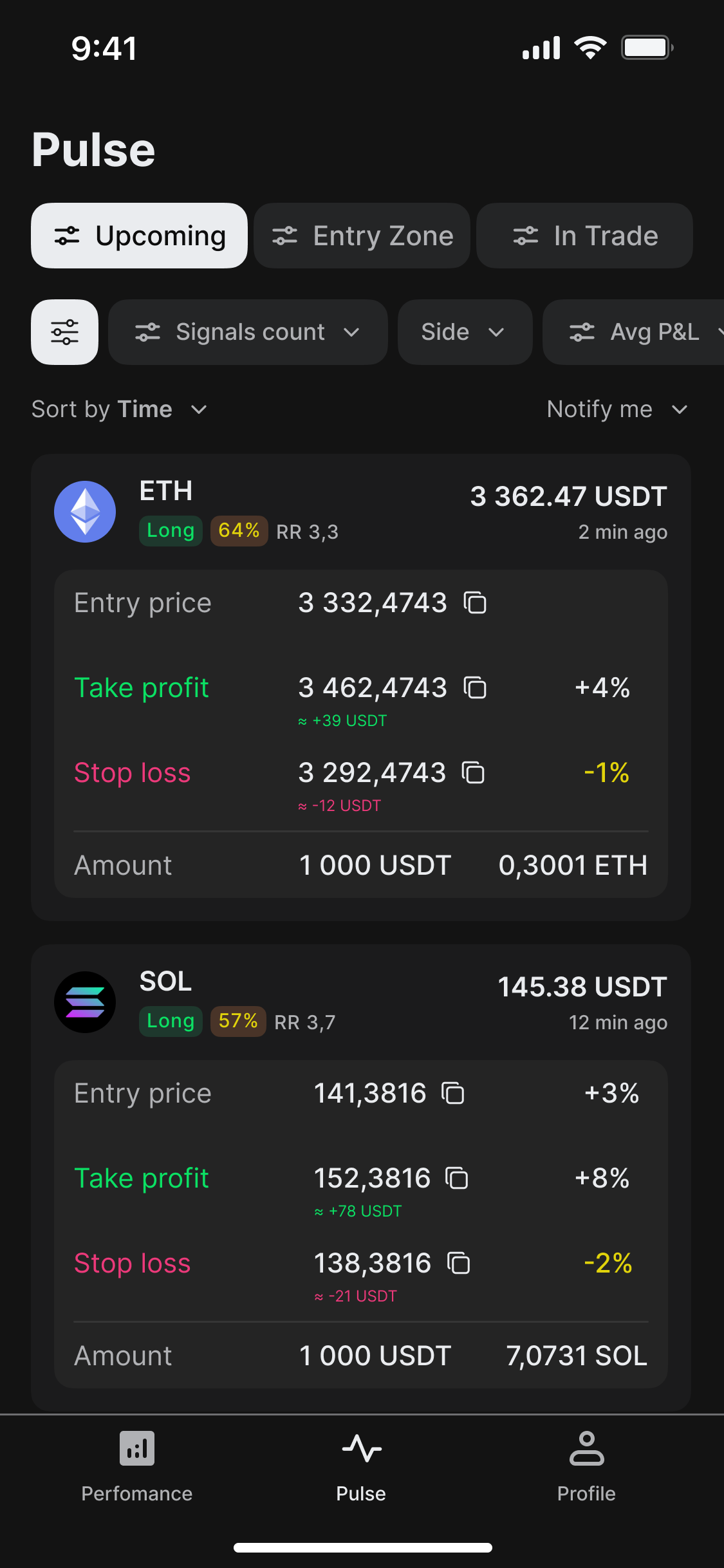
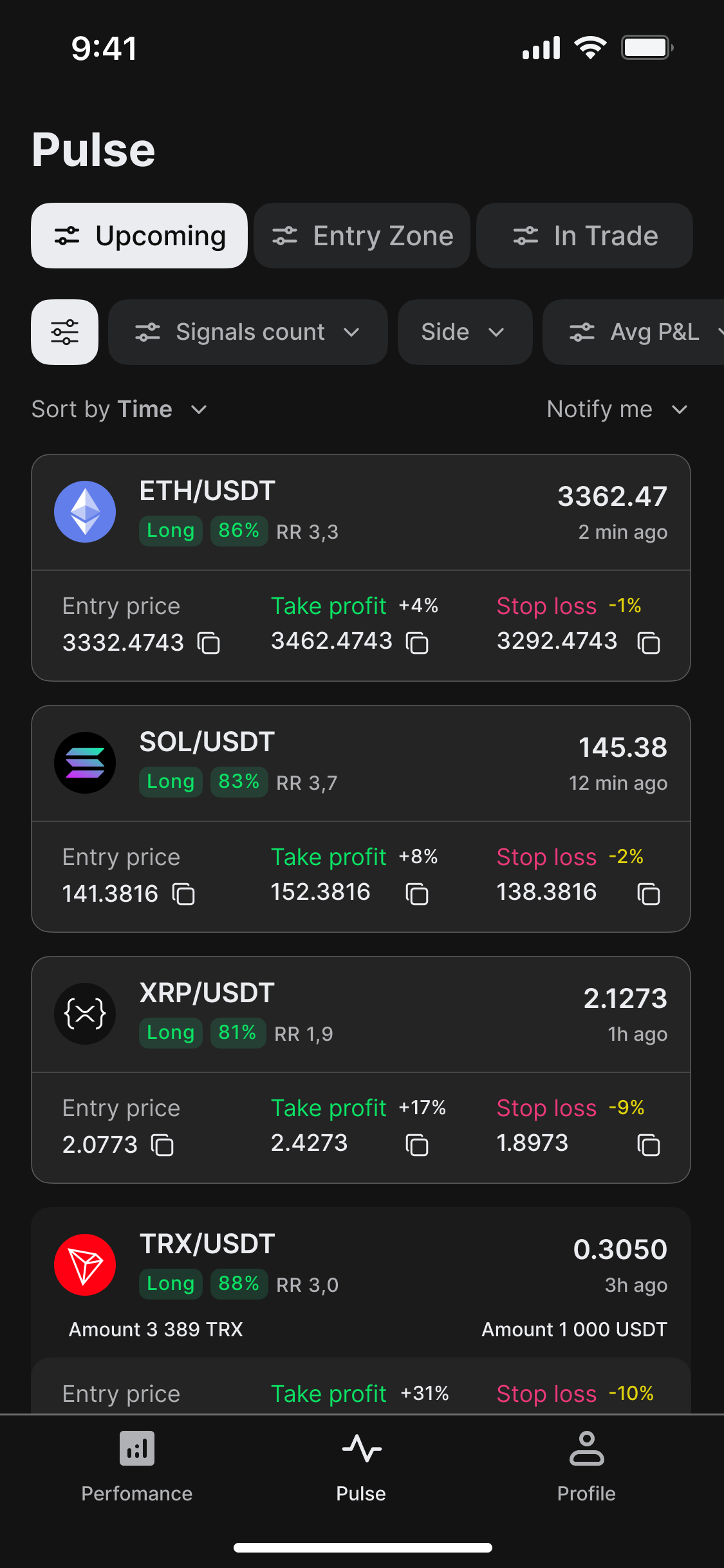
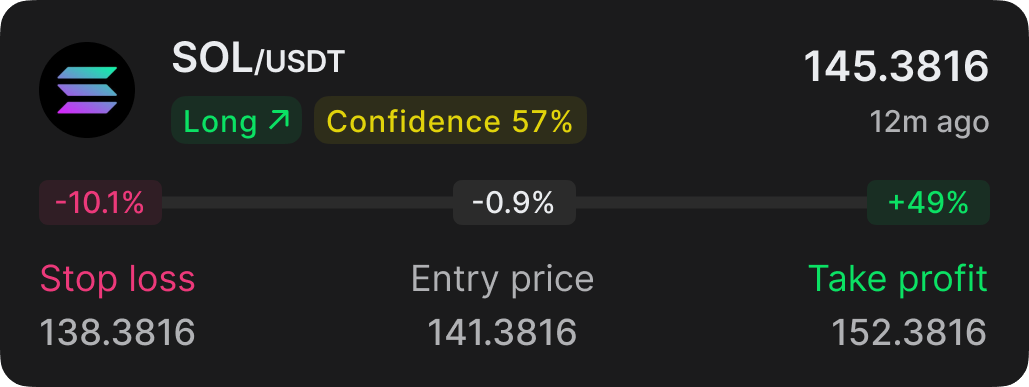
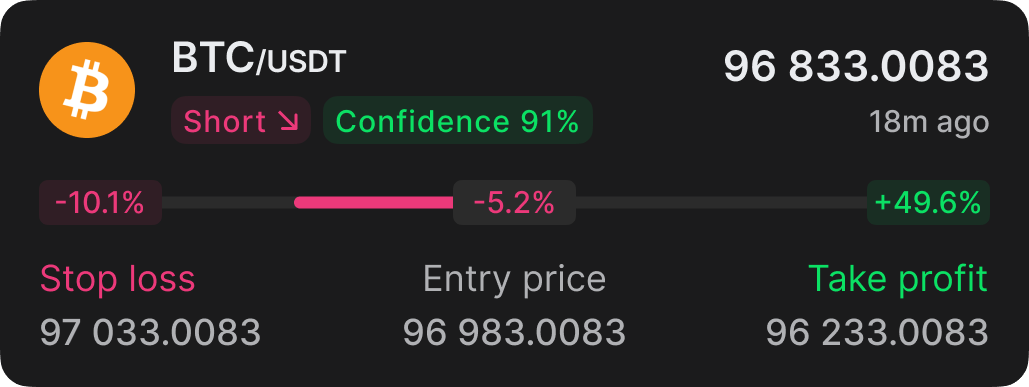
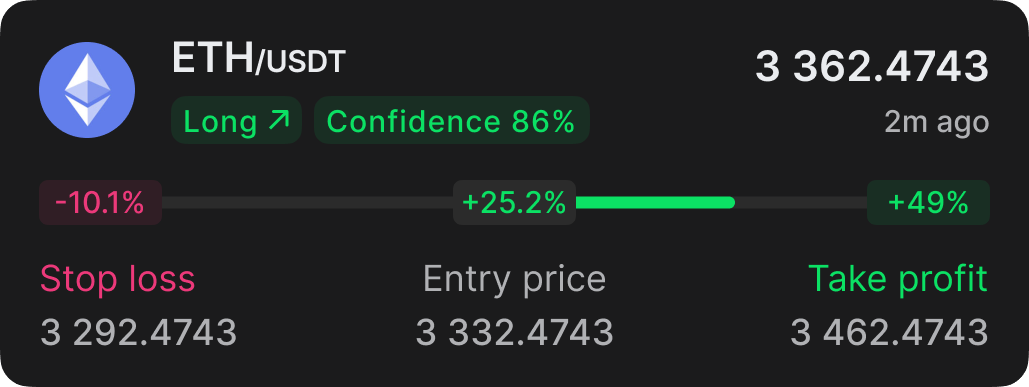
I tried a heavy card with amounts in USDT, an accordion, and the three prices in one row. The card that shipped keeps the three prices and adds one bar: where the price sits right now between the stop loss and the take profit.
We showed it to a trader who uses signals like these. They said they hadn't seen cards this clear and compact.

Confidence as a number
Every signal comes from a model. Confidence is how often that model has been right before.
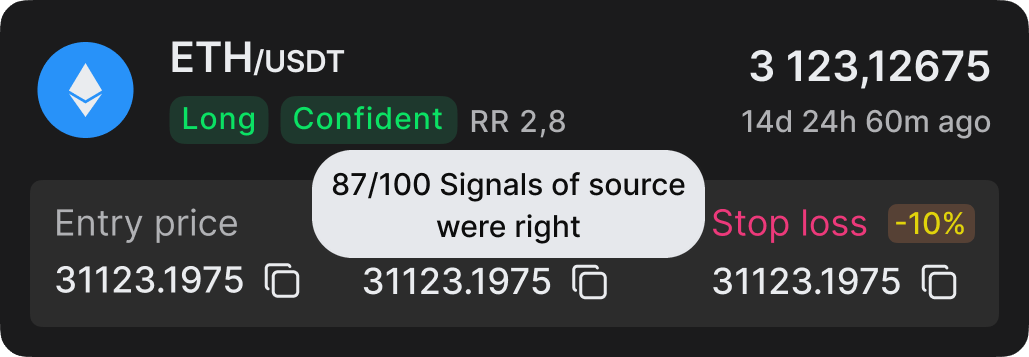
I tried words instead, Confident, Mixed and Doubtful, with a hint: 87 of 100 signals from this source were right. We went back to numbers. A green Confident covered both 70% and 98%, and at 70% you lose one time in three. People putting money in want the number.
Misses stay on screen
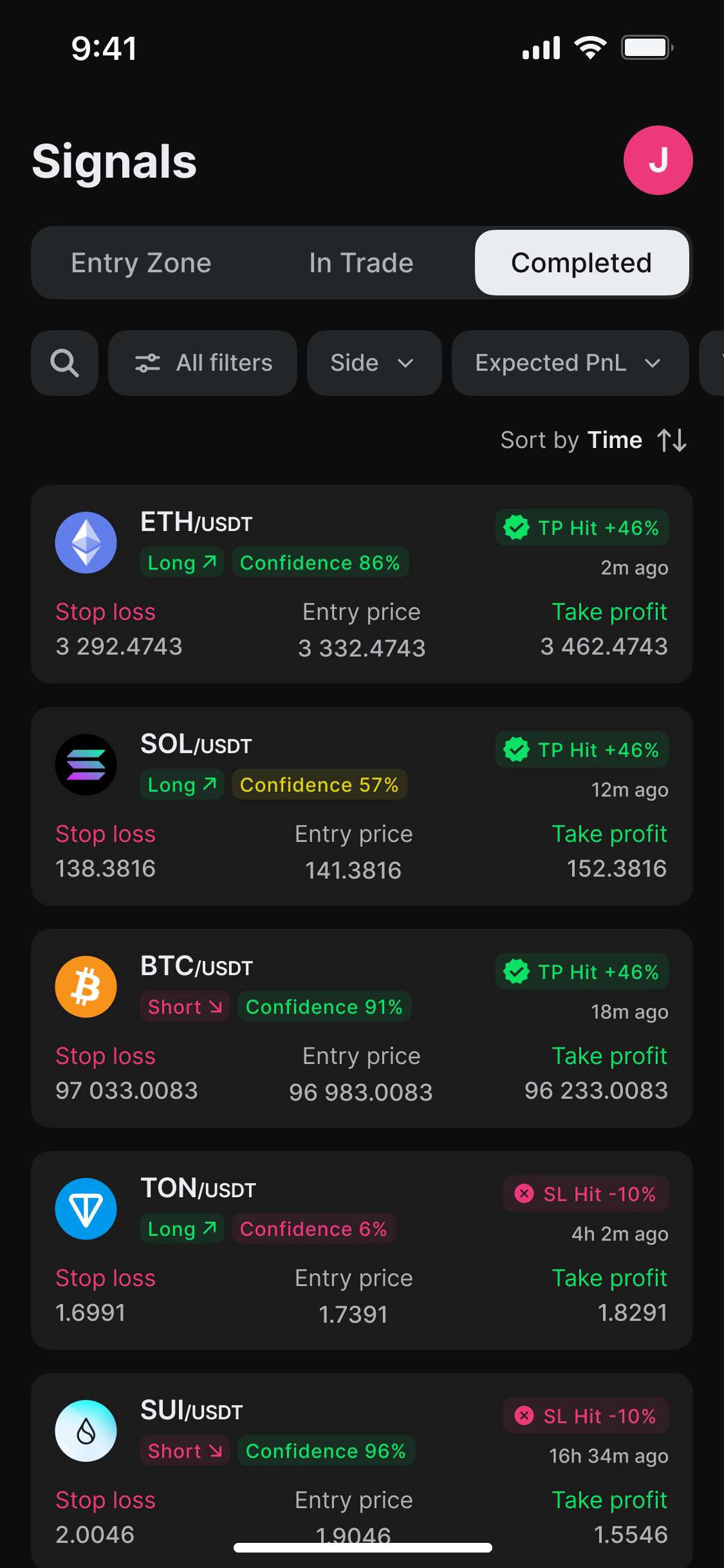
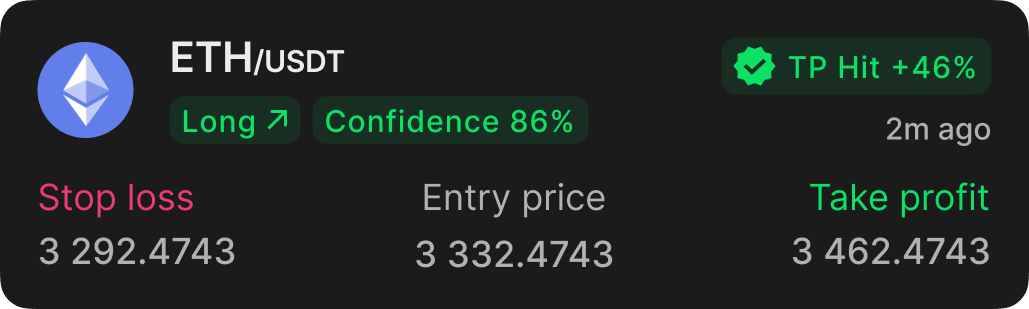
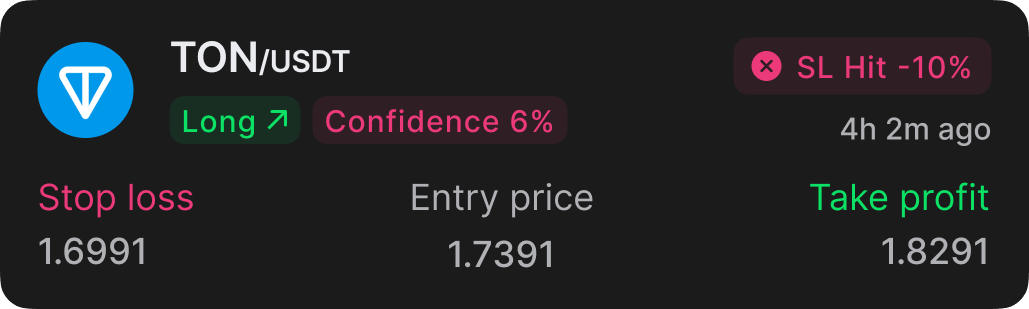
Completed shows a hit stop loss and an expired signal right next to the wins. Without the misses, the confidence number wouldn't mean anything.
We never used the word trading and never promised returns. We thought of it as a weather forecast: right most days, wrong sometimes, and open about both.
Three tabs, then two
We launched with three tabs: Entry zone, In trade, Completed. After launch our backend engineer told us people were acting on signals from In trade, when it was already too late to get in.
The team cut it to two tabs, In play and History. That fixed the confusion, but people still came in late. In Inalami, a concept we drew next, I named the tabs by what to do: Hot, Ongoing, Completed.
After any change I'd watch one number: how many people act on a signal after its entry zone has closed.
